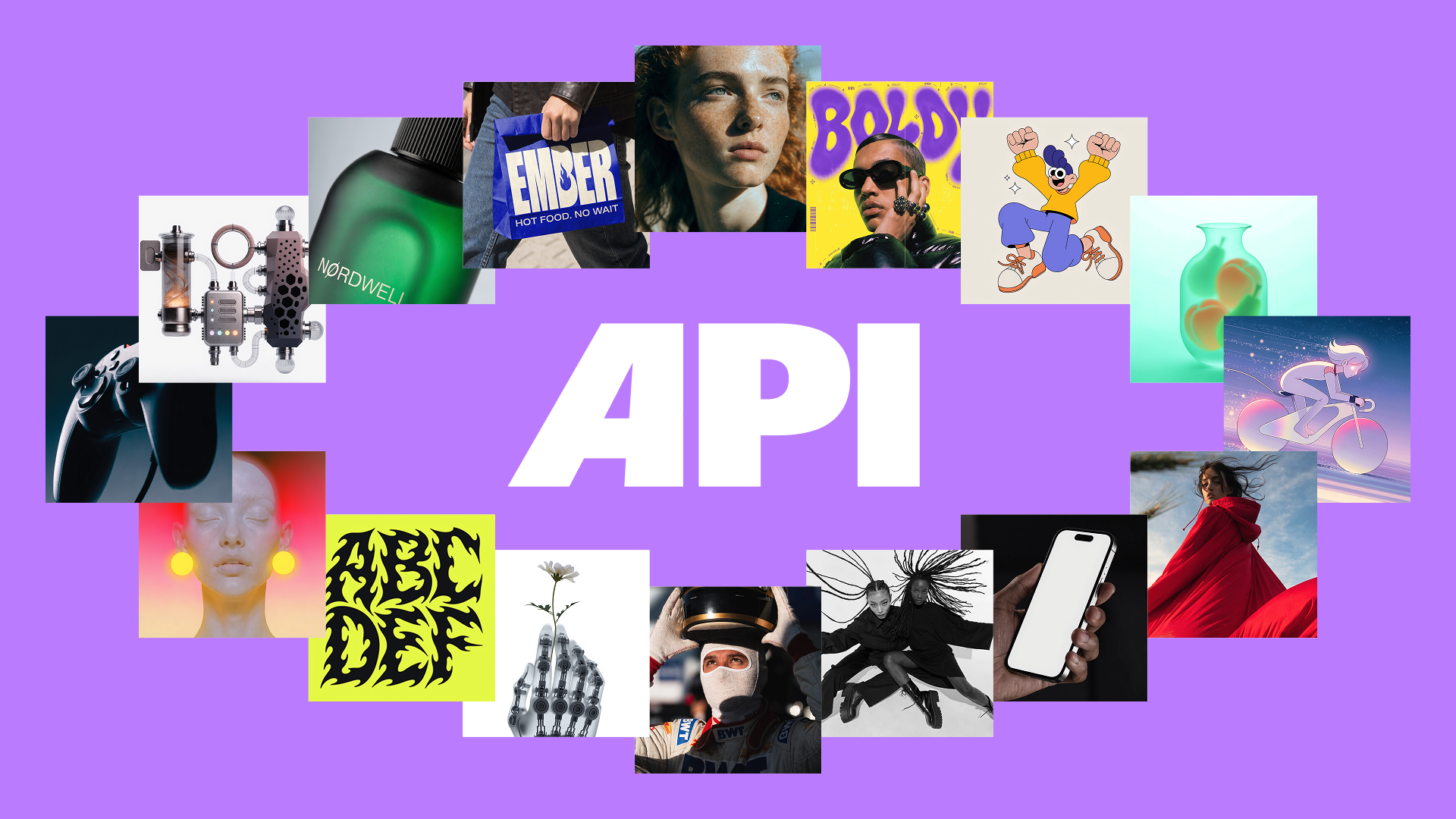
Two years ago, you picked whichever model produced was available. In 2026, six serious providers each solve a different problem, and choosing the wrong one means rebuilding your pipeline.
This comparison covers the Recraft API, OpenAI's GPT Image models, Google's Imagen, Flux from Black Forest Labs, Stability AI, and Ideogram. Every one of them earns its place here, and we will tell you plainly where each one wins.
How we compared
We looked at five dimensions that matter once you move past the demo stage. Controls: what you can actually specify beyond a prompt. Output quality: how the results hold up under a real brief. Predictability: whether the tenth generation looks like it belongs with the first. Pricing: what a real workload costs. Integrations: SDKs, platform availability, and how fast you get to a working call.
Recraft API
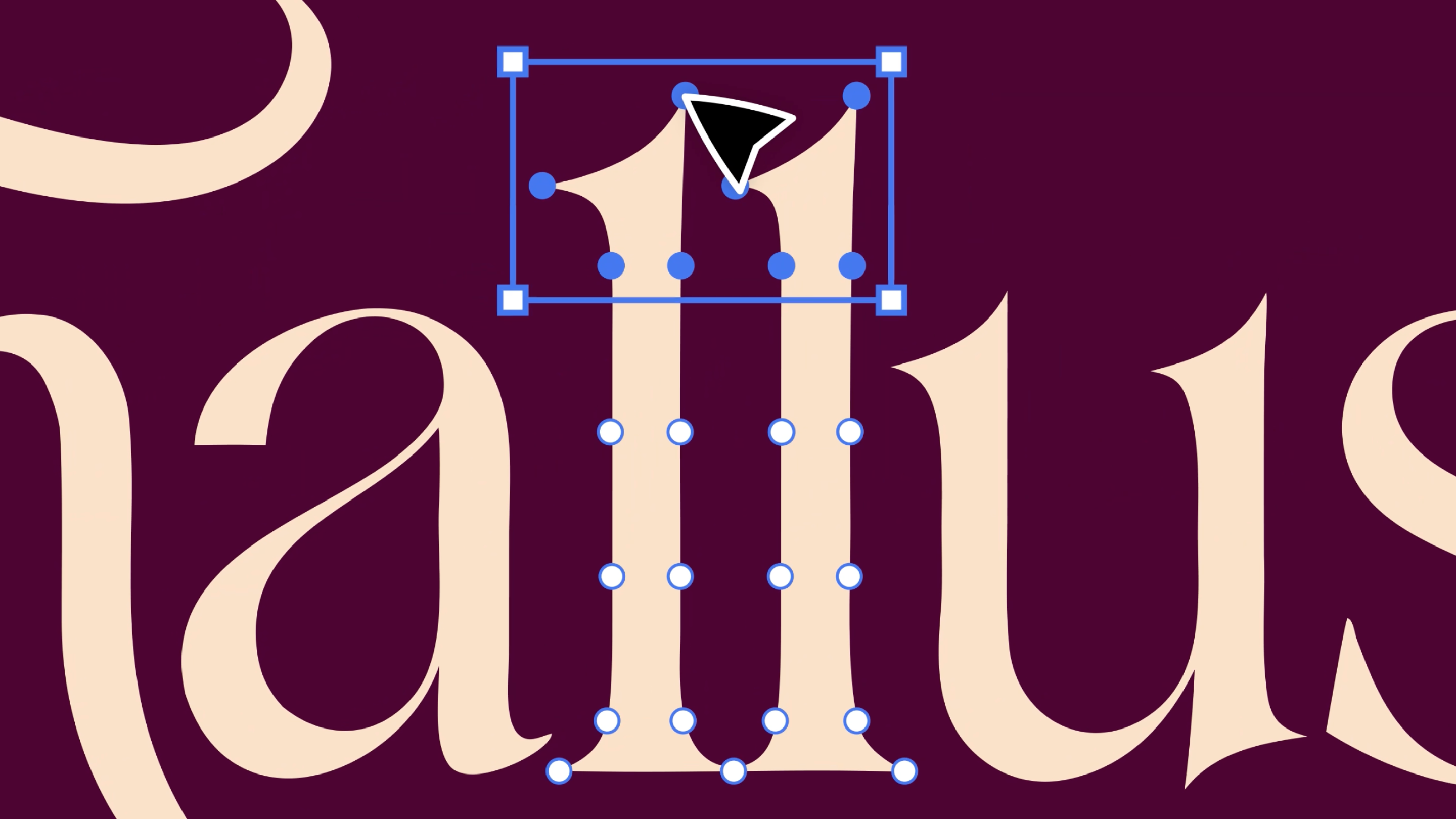
Recraft is the only API on this list that generates native SVG files. Not raster images traced into approximate paths, but genuine vector output with clean geometry you can edit node by node. If your product touches logos, icons, illustration, or anything that needs to scale from favicon to billboard, no other API offers this.
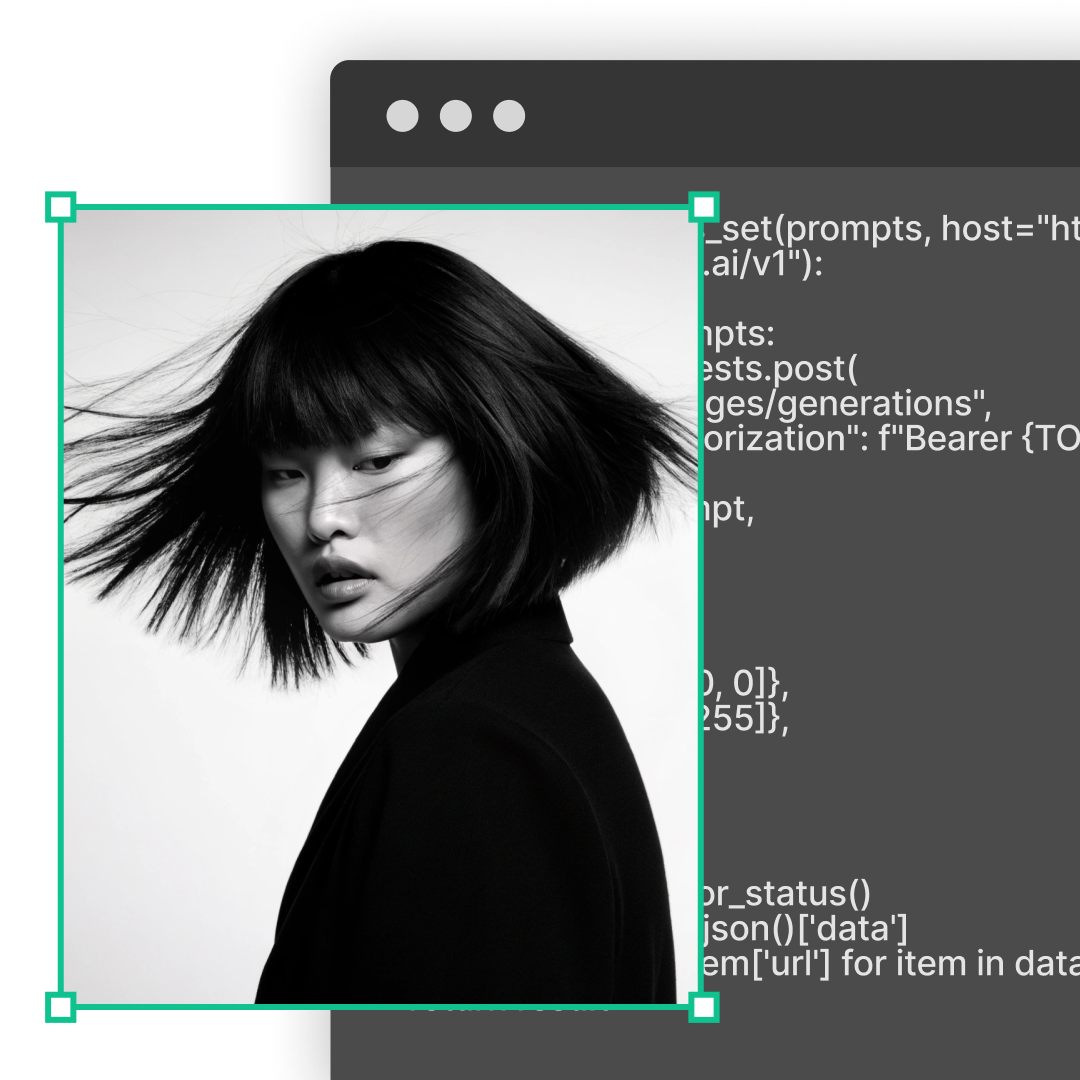
The controls run deeper than vectors. You can create reusable custom styles, pass an exact color palette through the rgb_colors parameter, set a background color, run inpainting and outpainting, remove backgrounds, and vectorize existing rasters. This is what art direction looks like as a parameter set: the brief stays yours, and the model follows it.
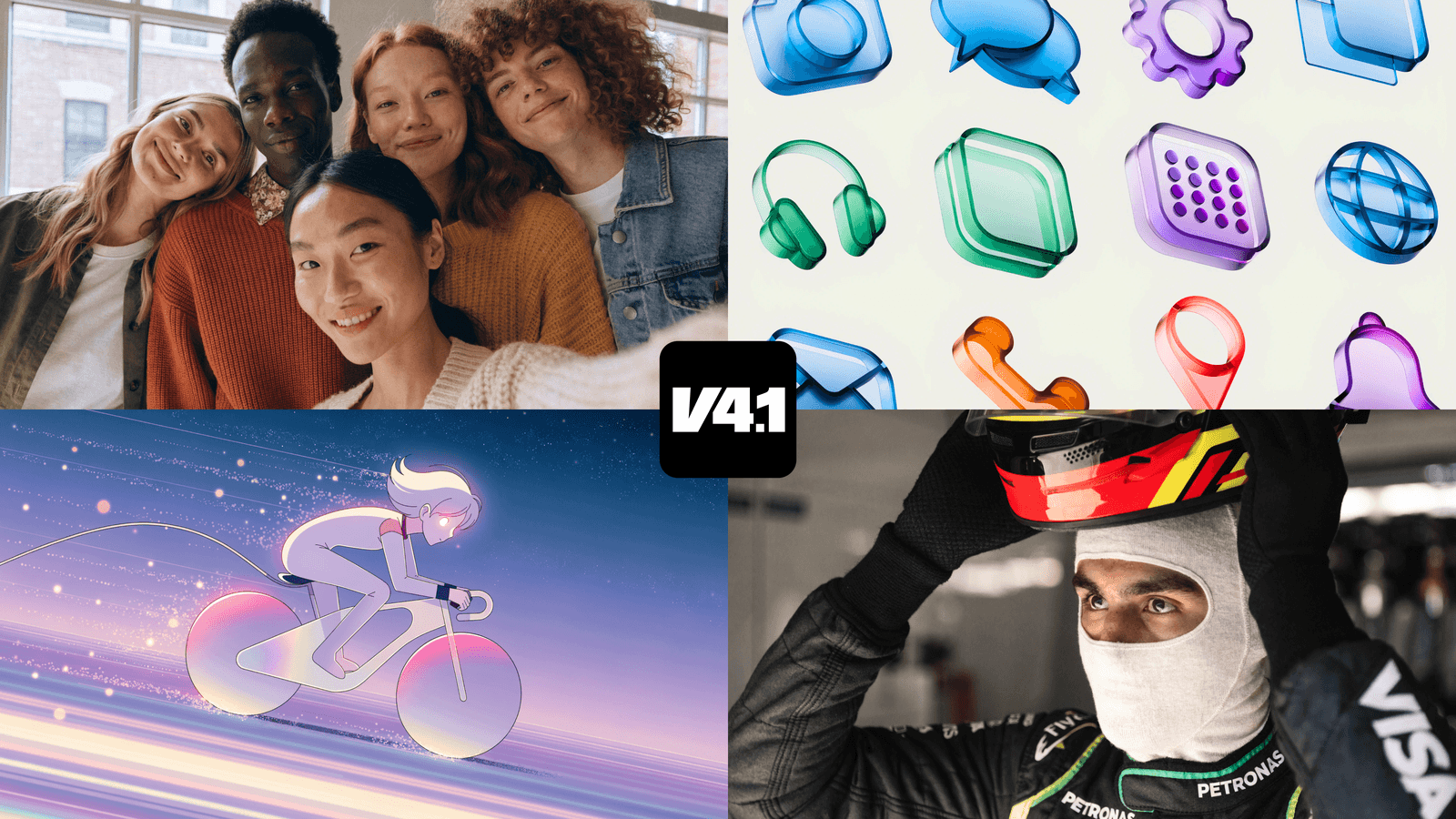
The current models are Recraft V4.1 and V4.1 Utility, released in May 2026, each in a standard version and a Pro version for 4K resolution. V4.1 is tuned for expressive, stylized work and creative exploration. V4.1 Utility holds the same aesthetic bar with more predictable, brief-driven output, and V4.1 Utility Pro currently ranks as the highest-rated text-to-image model on the leaderboard outside of Google and OpenAI. Recraft's previous model, V3, held first place on the Hugging Face text-to-image leaderboard for five consecutive months, so the benchmark placement is a pattern rather than a one-off.
Pricing is straightforward per-image billing: roughly $0.035 for a raster image and $0.08 for a vector. The API supports asynchronous jobs, batch generation, and MCP integration for agent workflows, and Recraft models are also available through OpenRouter and Vercel AI Gateway. Plus, all paid plans and paid images include full commercial rights.
Where Recraft is not the pick: if your entire workload is high-volume photorealistic stock imagery and nothing else, Flux will do it cheaper.
OpenAI GPT Image
GPT Image 2, released in April 2026, is the strongest instruction follower in the field. Feed it a dense, multi-clause prompt and it will hit more of the clauses than anything else, with text rendering accuracy that approaches print reliability. Distribution is unmatched: if your users already live in the OpenAI ecosystem, integration is one SDK call away, and the Batch API cuts costs by half for asynchronous workloads.
The price ladder is wide, from $0.006 per image at low quality to $0.211 at high quality. Watch the billing model, though. OpenAI meters images as output tokens, so edits, reference images, and long prompts add input token costs that the per-image tables do not show.
The trade-off is aesthetic range. GPT Image optimizes for broad general preference, which produces images that are correct more often than they are striking. It follows the brief. It rarely surprises you.
Google Imagen
Google is consolidating its image generation into the Gemini line. All Imagen models are deprecated and shut down on August 17, 2026, so new builds should start with Gemini 3.1 Flash Image, the recommended default, or step up to Gemini 3 Pro Image for high-fidelity work with reasoning-enhanced composition and character consistency across up to 14 reference inputs. Both handle conversational, multi-turn editing and multi-image fusion, and text rendering is consistently strong.
Google positions the Flash Image tier around speed and cost for high-volume use, which makes it a strong pick for enterprise scale on a Google stack. The output skews toward clean, safe, general-purpose imagery. For a distinctive visual point of view, it is not where you start. One practical note for anyone already on Imagen: migration is not optional, so factor the endpoint rewrite into your timeline.
Flux by Black Forest Labs
Flux 2 is loved for its photorealism. Product shots, environments, and photographic lighting come out with a fidelity that edges past every other API here, and the model family covers the full cost spectrum: FLUX.2 klein from around $0.014 per image for speed, FLUX.2 Maxx at roughly $0.07 for 4MP resolution. The developer experience is strong, with a developer-specific model, FLUX.2 [dev], but teams need to contact sales for a company-specific quote.
However, the main friction is the lineup itself, which has grown complex enough that picking the right variant takes research. And Flux's strength ends where the photograph ends. Once you need vectors, brand styles, or design systems rather than photographs, you are assembling that layer yourself.
Stability AI
Stability earned its place as an open-source leader in the AI image generation department. Stable Diffusion 3.5 ships in Large, Large Turbo, and Medium variants. And Stable Image Ultra is their flagship image service based on the 3.5 Large model. Image generation with Stable Image Ultra runs about $0.08 per image right now. If you need to train a model on your own product catalog, run ControlNet pipelines, or keep every inference call on your own hardware, this is an ecosystem built for it.
The honest caveat is that raw output quality no longer leads the field, and the total cost of self-hosting includes engineering time that per-image pricing comparisons hide. The Community License is free below certain revenue thresholds, with an Enterprise License required above them. Stability is the right call when control over the pipeline matters more than frontier output.
Ideogram
Ideogram has a typography reputation, and Ideogram 4.0, released in June 2026, extends it. Multi-line text, logos, signage, and dense layouts render with a fine accuracy, backed by a structured JSON prompting interface with bounding-box layout control and hex-level color conditioning. It is also Ideogram's first open-weight release.
Hosted API pricing runs $0.03 per image on Turbo, $0.06 on Default, and $0.10 on Quality. One thing to verify before you build: the downloadable weights carry a non-commercial license, so commercial production runs through the hosted API or a separate agreement.
If the words inside the image are the product, Ideogram is a good one. Outside the typography lane, its aesthetic ceiling sits below the general-purpose leaders.
A note on Midjourney
Midjourney still has no official public API as of mid-2026. The wrapper services that automate its Discord and web interfaces violate Midjourney's terms of service and risk account bans, which makes them a poor foundation for anything in production. Midjourney V8.1 remains a gorgeous image maker. It is a creative environment, not developer infrastructure, and this comparison respects that boundary.
Which one should you build on?
Use Flux when the deliverable is only a photograph. Use Ideogram when the deliverable is words inside an image. Use GPT Image when your users write unpredictable prompts and you need every clause followed. Use Gemini when you live on Google Cloud and platform integration decides. Use Stability when you need the weights on your own metal.
Use Recraft when the deliverable is designed rather than merely AI-generated. Logos, icons, illustration systems, brand visuals, and anything where a color palette, a custom style, and a vector file are requirements rather than nice-to-haves. Recraft is the only API here where aesthetic ambition is the point of the model instead of a side effect, and where the output answers to your brief instead of the model's defaults.
The right API is the one that matches what you are shipping. If what you are shipping needs to be beautiful, on-palette, and editable after generation, start with Recraft. Get an API key and make your first call in minutes.
.svg)