Midjourney makes beautiful images. Nobody serious disputes that, and to give credit where it is due, its commercial terms are friendlier than most people assume. Any paid Midjourney plan grants commercial-use rights, and its terms say you own what you create to the fullest extent possible under applicable law.
So this is not a post claiming you cannot do commercial work with Midjourney. You can. This is a post about everything that sits around and after the image: the fine print on who exactly owns it, who can see it, and what kind of file you are holding when the client asks for the logo in SVG. That is where the two platforms stop resembling each other.
Here is what Recraft Studio offers that Midjourney does not.
Ownership without checking your revenue first
On Midjourney, ownership comes with an org chart question. If you work at a company earning more than $1,000,000 a year in revenue, you must be on a Pro or Mega plan, at $60 to $120 per month, to own your assets. The $10 and $30 tiers do not cover you, no matter which one you personally paid for.
Recraft has one rule instead: rights are established at the moment of generation on any paid plan. Generate on any paid plan, starting at only $10/month, and you own the output, with full commercial rights. It does not matter whether you are a freelancer, a five-person studio, or a team inside a large company. There is no revenue threshold and no premium tier gatekeeping the ownership you thought you already bought.
The rights survive cancellation on both platforms, which is worth crediting. But only one platform makes you read your employer's financials before you know which plan you need.
An API, when the work outgrows the canvas
Midjourney has no public API. If your commercial use case involves generating at scale, plugging image generation into a product, or automating anything, there is no supported path.
Recraft has an API, and the same ownership rule applies to it. Generate through the API on a paid plan and the content is fully yours.
Real vectors, not pixels pretending
Midjourney outputs raster images. For a poster or a mood board, that is fine. For a logo, an icon set, or anything that needs to scale from a favicon to a storefront, it is a problem you end up solving manually with tracing tools and patience.
Recraft generates native SVG files directly from a prompt. The files have clean shapes and editable paths, and they are ready for Figma or Illustrator. You are not converting pixels into an approximation of a vector. The output is a vector from the start.
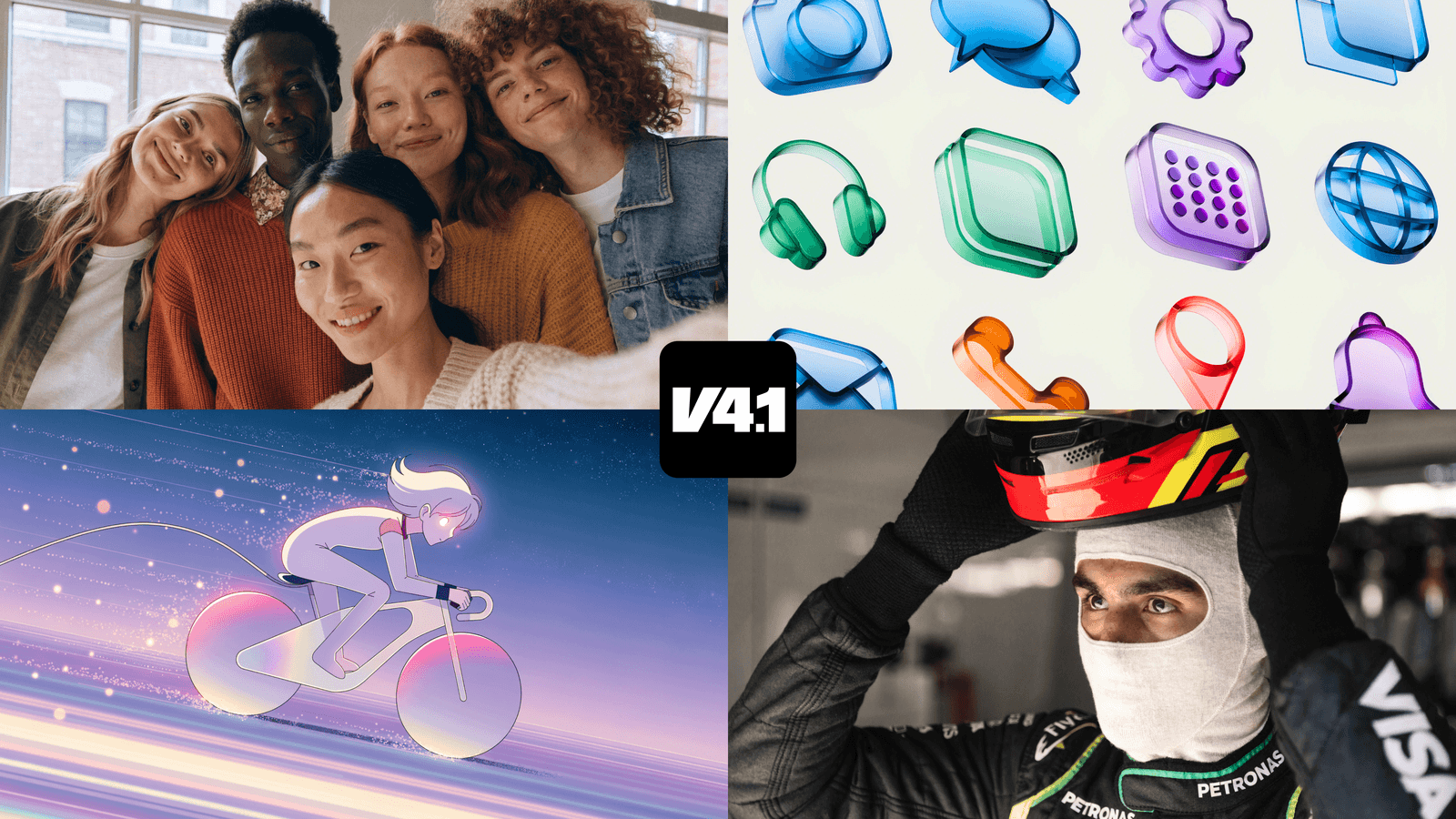
There is a reason Recraft has dedicated vector models. True, clean, exportable vectors deserve a model to themselves. The V4.1 family includes V4.1 Vector for everyday work and V4.1 Pro Vector for higher-resolution output, both built on the same visual judgment as the flagship model.
And because the output is a real vector, you can edit it like one without leaving Recraft Studio. Every anchor point, every path, and every color is adjustable. Nudge a curve, swap the palette, or delete a shape entirely, the same way you would in any vector tool. The generation is a starting point you can actually push around, not a finished file you are stuck with. Icons and vectors simplify cleanly when you ask for simplicity, without extra detail you would otherwise strip out by hand. Logos default to a refined output with less ornamentation unless you specify it, which makes them considerably easier to export and edit.
For anyone whose deliverables end in .svg, this is not a nice-to-have. It is the whole job.
The image follows your brief, not the model's taste
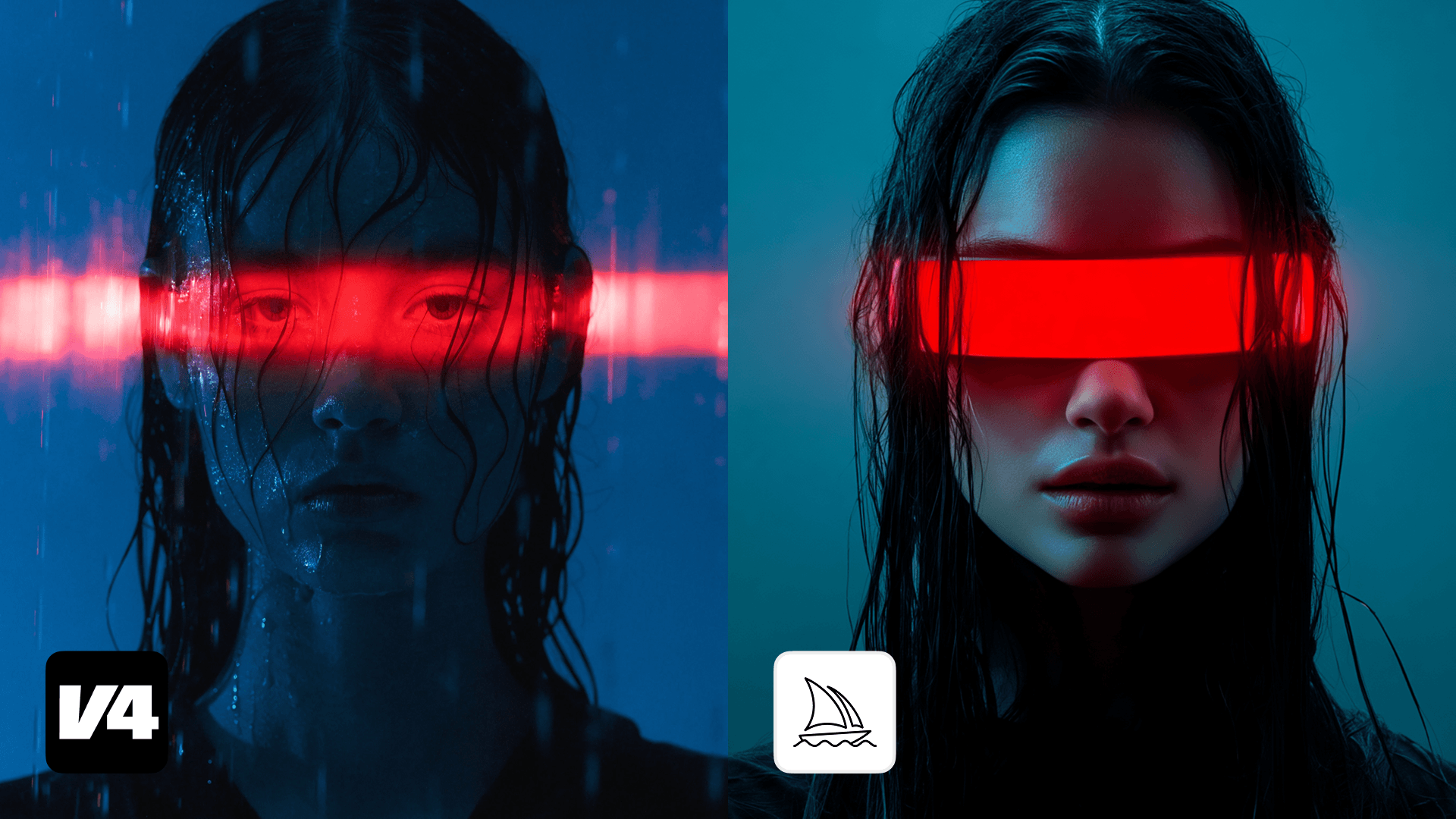
Midjourney's beauty is Midjourney's taste, and it shows up whether you asked for it or not. That is a feature when you are exploring. It is a liability when a client has approved a direction and you need generation forty to match generation four.
Commercial work is repeatable work. Recraft is built around that idea:
- Custom brand styles. Upload images that represent a visual identity and the model learns it. New generations belong to the same family instead of starting from zero every time.
- Exact brand colors. Define palettes with hex codes and the output respects them. No more "close enough to the brand blue."
- Positioning control. Place logos, products, or characters where the layout needs them, instead of regenerating and hoping.
The model's job is to make your vision photogenic, not to substitute its own. When the brief belongs to a client, that stops being philosophy and starts being the difference between one revision round and six.
Utility models for the unglamorous work
Some commercial projects do not need drama. They need clean, simple, and predictable. Product shots, e-commerce imagery, icons, and mockups fall apart when the model gets expressive with lighting and composition.
V4.1 Utility and V4.1 Utility Pro exist for exactly this. They focus on flat lighting, front-facing composition, and simple scenes. Where the main V4.1 model experiments with angle and atmosphere, Utility delivers the calm, straightforward output that a product catalog actually requires. There is a Utility Vector variant too, for when the predictable thing you need happens to be an SVG.
Where Midjourney still makes sense
Honesty converts better than chest-beating, so here it is. If your work is exploratory, editorial, or purely visual, Midjourney remains a genuinely impressive aesthetic engine with fair commercial terms for individuals and small teams. Plenty of creatives use both platforms and are right to.
But the moment the brief says commercial, the checklist gets longer. You want ownership that does not depend on your employer's revenue, privacy that does not cost $60 a month, real SVG files you can edit down to the anchor point, and a model that follows your direction instead of improvising on it. That is the work Recraft Studio was built for.
Start with the work that pays
Every paid plan includes full ownership, full commercial rights, and private generations. Generate the logo, keep the rights, and send the invoice.
Try Recraft Studio at recraft.ai.
.svg)